Saturday, January 12, 2019

Chemquiz


Q.1 The structure of CaB₆ is close to that of
       A.Cesium chloride
       B.Nickel arsenide
       C.Rock salt
       D.Zink blende
Image result for cab6 structure

Answer:-A
Explanation:-The calcium atoms are arranged in simple cubic packing so that there are holes between groups of eight calcium atoms situated at the vertices of a cube. The simple cubic structure is expanded by the introduction of the octahedral B₆ groups and the structure is a CsCl-like packing of the calcium and hexaboride groups. Another way of describing calcium hexaboride is as having a metal and a B₆²⁻ octahedral polymeric anions in a CsCl-type structure were the Calcium atoms occupy the Cs sites and the B₆ octahedra in the Cl sites The Ca-B bond length is 3.05 Å and the B-B bond length is 1.7 Å.

Q.2 Dinuclear  anion [I₂(OH)₂O₈]⁴⁻ has two bridging oxo groups.The geometry around each iodine         is
      A.octahedral
      B.monocapped octahedral
      C.square pyramidle
      D.pentagonal bipyramidle
Ansewer:-A
Explanation:--Central element is Iodine.
                      -All ligands should be equally distributed between two Iodine.
                      -Two oxygen are presents as oxo (bridging) groups.
                      -Rest 6 oxygen will be as three to each iodine.
 The structure of these compound is octahedral.

Q.3 Using a double beam U-V visible spectrophotometer Beer's law fails for K₂Cr₂O₇ solution when
       A.Intensity of light source is changed
       B.Detector is not a photomultiplier tube
       C.Cuvette of 2cm size is used
       D.pH is not kept same in all measurement
Answer:-D
Explanation:--Beer's law is given as
                        A=εcl
                      ε = molar absorbtibility ,
                      c = concentration of compound,
                      l = path lenth
- K₂Cr₂O₇ contain dichromate ion Cr₂O₇²⁻
-The ions are less basic
-Increase in pH will increase the basisity of compound.
-In solution......Cr₂O₇²⁻ + 2H₂O⟶ 2CrO⁴⁻ + 2H⊕
-According to Le-chetellier's principle increase pH will increase no. of  H⊕ ion and equilibrium will shift right side.
-more chromate ion will form.

Q.4 Trivalent lanthenide ion having isotropic magnetic susceptibility is
     A.Eu3+
     B.Gd3+
     C.Yb3+
     D.Lu3+
Answer:-B

Q.5 Among the elements Zn,Ga,Ge and As,the one with the lowest first ionization energy is
      A.As
      B.Zn
      C.Ga
      D.Ge
Answer:-C

Tuesday, January 8, 2019

Physical chemistry quiz

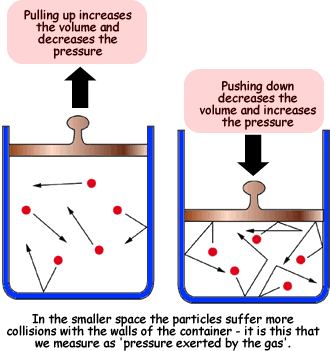
Q.1 In order to increase the volume of a gas by 10%, the pressure of the gas should be
      A. increased by 10 %
      B. increased by 1 %
      C. decreased by 10 %
      D. decreased by 1 %
 Related image
Answer:-C
Explanation:-Boyle measured the volumes of gases at different pressures. Boyle found that when the pressure of gas at a constant temperature is increased, the volume of the gas decreases. when the pressure of gas is decreased, the volume increases. this relationship between pressure and volume is called Boyle's law
.
Q.2 Which one of the following is not a perfect differential ?
       A.dG
       B.dT
       C.dQ
       D.dH
Answer:-C
Explanation:-dU, dG, dH etc are all exact differentials and the variables themselves are known as state functions because they only depend on the state of the system. However, dq and dw for example, are inexact differentials. Exact differentials are not dependent on the path but inexact differentials are.

Q.3 Reverse Osmosis is an example of
      A.Reversible process
      B.Irreversible process
      C.Equilibrium process
      D.Non-spontaneous process
Answer:-D

Saturday, December 29, 2018

Chem quiz

Q.1  A reaction involving two different reactants can never be
       (a) Unimolecular reaction
       (b) First order reaction
       (c) second order reaction
       (d) Bimolecular reaction

Image result for first order,second order,unimolecular reaction images

Answer (a) Unimolecular reaction

Q.2 Due to the presence of an unpaired electron, free radicals are:
      (a) Chemically reactive
      (b) Chemically inactive
      (c) Anions
      (d) Cations

Answer (a) Chemically reactive

Q.3 Lattice energy of an ionic compounds depends upon
      (a) Charge on the ion only
      (b) Size of the ion only
      (c) Packing of ions only
      (d) Charge on the ion and size of the ion

Answer (d) Charge on the ion and size of the ion

Q.4 The highest electrical conductivity of the following aqueous solutions is of
      (a) 0.1 M acetic acid
      (b) 0.1 M chloroacetic acid
      (c) 0.1 M fluoroacetic acid
      (d) 0.1 M difluoroacetic acid

Answer (d) 0.1 M difluoroacetic acid

Q.5 During the process of electrolytic refining of copper, some metals present as impurity settle as           ‘anode mud’ These are
     (a) Sn and Ag
     (b) Pb and Zn
     (c) Ag and Au
     (d) Fe and Ni

Answer (c) Ag and Au

Friday, December 21, 2018

Chem quiz

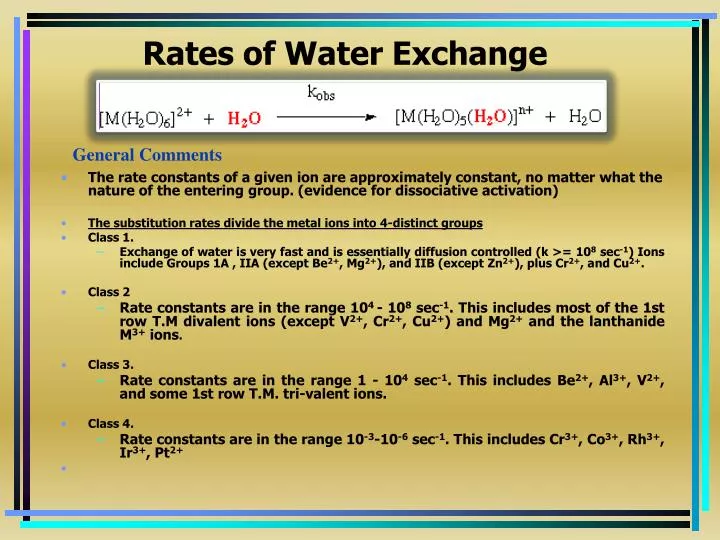
Q.1 The water exchange rates for the complex ions follow the order
         (A) [V(H2O)6]2+ > [Co(H2O)6]2+ > [Cr(H2O)6]3+
         (B) [Cr(H2O)6]3+ > [Co(H2O)6]2+ > [V(H2O)6]2+
         (C) [Co(H2O)6]2+ > [Cr(H2O)6]3+  > [V(H2O)6]2+
         (D) [Co(H2O)6]2+ > [V(H2O)6]2+ > [Cr(H2O)6]3+

Image result for water exchange rate images

Ansewr:-D 

Q.2 Based on Wade’s rule, the structure-type of [B₅H₈]⁻ is
        (A) closo
        (B) nido
        (C)  arachno
        (D)  hypho

Ansewr:-B

Q.3  The coordination geometries around the copper ion of plastocyanin (a blue-copper protein) in              oxidized and reduced form, respectively, are
         (A) tetrahedral and square-planar
         (B) square-planar and tetrahedral
         (C) distorted tetrahedral for both
         (D) ideal tetrahedral for both

Answer:-C

Wednesday, December 19, 2018

Chem quiz

Q.1 Mention the formula to calculate pH of a solution?


 Answer:- In order to calculate the pH of a solution you have to use the formula pH= -log [H+] or pH                    = -log [H3O+]

Q.2 Mention how many millilitre is equal to 1 litre and how many microliter is equal to litre?
Answer:-  1 millilitre = 0.0001 litre
                 1 microliter = 0.0000001 litre

Q.3 Explain what is titration?
Answer:- Titration is a process to determine the molarity of a base or an acid. In this process a reaction is carried out between the known volumes of a solution with a known concentration, against the known volume of a solution with an unknown concentration.


Monday, December 17, 2018

Organic quiz

Q.1 Phenol, when it first reacts with concentrated sulphuric acid and then with concentrated nitric              acid, gives
      (a) 2,4,6-trinitrobenzene
      (b) o-nitrophenol
      (c) p-nitrophenol
      (d) nitrobenzene

Explanation:-

Sulfonation
The reaction of phenol with concentrated sulfuric acid is thermodynamically controlled. At 25°C, the ortho product predominates while at 100°C, the para product is the major product.
Notice that at both 25° and 100°, initially an equilibrium is established. However, at the higher temperature, the equilibrium is destroyed and the more thermodynamically stable product is produced exclusively.

Nitration
Phenol, when treated with dilute nitric acid at room temperature, forms ortho‐ and para‐nitrophenol


Answer (b) o-nitrophenol

Q.2  α-D-(+)-glucose and β-D-(+)-glucose are
       (a) conformers
       (b) epimers
       (c) anomers
       (d) enantiomers

Explanation:-
Anomers are stereoisomers of cyclic sugars that differ in configuration only at the hemiacetal or hemiketal carbon.

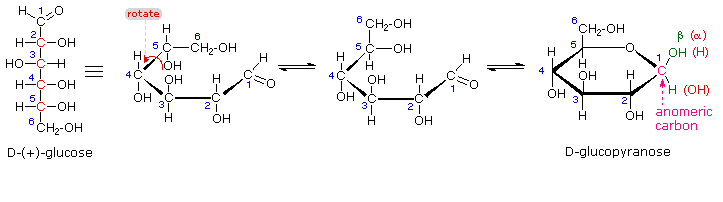
Glucose is both an aldehyde at C-1 and an alcohol at C-5. These two groups can react with each other to form a cyclic hemiacetal (glucopyranose).
www2.chemistry.msu.eduwww2.chemistry.msu.edu

In the hemiacetal, C-1 has become chiral. It can have the OH group either "down" or "up". These two isomers are anomers, and C-1 (the original carbonyl carbon) is the anomeric carbon.
Answer (c) anomers

Q.3 HBr reacts with CH2 = CH – OCH3 under anhydrous conditions at room temperature to give
      (a) CH3CHO and CH3Br
      (b) BrCH2CHO and CH3OH
      (c) BrCH2 – CH2 – OCH3
      (d) H3C – CHBr – OCH3

Explanation:-

Methyl vinyl ether is a very reactive gas. It is hydrolysed rapidly by dilute acids at room temperature to give methanol and aldehyde.

However, under anhydrous conditions at room temperature, it undergoes many addition reactions at the double bond.


Answer (d) H3C – CHBr – OCH3

Friday, December 7, 2018

Basic quiz

Q.1 An atom has 2 electrons in K-shell, 8 electrons in L-shell and 6 electrons in M-shell. The number       of S-electrons present in the element is:
      A.6
      B.4
      C.10
      D.9


Answer:-6

Q.2 The Boltzmann constant K is equal to:
      A. N/R
      B. R/N
      C. 1/NR
      D. NR

Answer:-B


Q.3 Rutherford’s scattering experiment is related to:
      A. Neutron
      B. Nucleus
      C. Proton
      D. Electron

Answer:-B

Saturday, December 1, 2018

Mechanism Organic reaction quiz

Q.1 Covalent bonds can be break by
      A.homolytic fission
      B.heterolytic fission
      C.homolytic fusion
      D.both A and B


Answer:-D
Explanation:-

Bond cleavage is the splitting of a chemical bond.

There are two types of bond cleavage: homolytic and heterolytic.

In homolytic cleavage, the two electrons in the bond are divided equally between the products.


In heterolytic cleavage, one atom gets both of the shared electrons.

Q.2 Formation of radicals which attack reactants molecules generate more free radicals. This step is a       A.initiation step
       B.propagation step
       C.termination step
       D.elimination step

Answer:-B

Q.3 An acceptor of pair of electron is termed as
      A.nucleophile
      B.electrophile
      C.carbocation
      D.anion

Answer:-B

Q.4 In a free radical reaction, free radicals are formed at
      A.initiation step
      B.propagation step
      C.termination step
      D.both A and B

Answer:-D

Sunday, November 25, 2018

Chem quiz

Q.1 The inert gases are ____ in water
      A. sparingly soluble
      B. insoluble
      C. soluble
      D. None of these


Explanation :-

Noble gases are non-polar substances, so the only form of intermolecular forces that they have are London dispersion forces.

When a polar molecule (with dipole-dipole forces) dissolves in water, the slightly positive end of water is attracted to the slightly negative end of the other molecule.
So, the molecules will be separated from each other because they have a greater attraction with water.

However, when noble gases are dissolved in water, they only dissolve very slightly.
Noble gases only have London dispersion forces, so there's very little attraction between water and these noble gases.

They still can dissolve, but only very little, because some water molecules will be able to form dipole-induced dipole attractions with the noble gas atom.

This is when the positive side of a water molecule induces a negative charge on the noble gas atom (or vice versa), creating a slight attraction.

            Purdue Chemistry


Answer:-A

Q.2 The molecular formula of phosphorous is
      A. P1
      B. P2
      C. P3
      D. P4

Answer:-D

Q.3 The method of concentrating the ore which makes use of the difference in density between ore            and impurities is called
      A. liquation
      B. leaching
      C. levigation
      D. magnetic separation

Answer: Option C


Tuesday, November 20, 2018

chem quiz

Q.1. Water drops are spherical because of ?
        A.viscosity
        B.density
        C.polarity
        D.surface tension


Explanation:-

This is due to the surface tension of the liquid.

The cohesive force between the liquid molecules is responsible for the phenomenon called surface tension.

The cohesive forces between molecules in a liquid are shared with all neighboring molecules. Those on the surface, they have no neighboring molecules above and, thus, exhibit stronger attractive forces upon their nearest neighbors on and below the surface.

Surface tension could be defined as the property of the surface of a liquid that allows it to resist an external force, due to the cohesive nature of the water molecules.

Answer:-D


Q.2 Which one of the following metals does not react with water to produce Hydrogen?
       A.Cadmium
       B.Lithium
       C.Potassium
       D.Sodium

Answer:A

Q.3 Aspirin is
       A.acetyl salicylic acid
       B.sodium salicylate
       C.methyl salicylate
       D.ethyl salicylate

Answer:A


Thursday, November 15, 2018

chem quiz

Q.1 The Mercury and Sodium street lamps light up because of
       A.atomic absorption
       B.atomic emission
       C.electron absorption
       D.electron emission


Explanation:-

The mercury vapor lamp is a high intensity discharge lamp. It uses an arc through vaporized mercury in a high pressure tube to create very bright light directly from it's own arc. This is different from fluorescents which use the mercury vapor arc to create a weaker light that mainly creates UV light to excite the phosphors. The "Merc" as it is known has been a workhorse for society; lighting streets, factories and large areas for over 100 years.

Sodium Lamps were first produced commercially by Philips in Holland in 1932. There are two kinds of sodium lights: Low Pressure (LPS) and High Pressure (HPS). These lamps are mostly used for street lighting as well as industrial uses.

The lamp works by creating an electric arc through vaporized sodium metal. Other materials and gases are used to help start the lamp or control its color.

Answer:-atomic emission

Monday, October 29, 2018

NEET EXAM QUIZ


Q.1 In the structure of ClF₃, the number of lone pairs of electron on central atom 'Cl' is
       A.Four 
       B.Two
       C.One
       D.Three


Explanation:-Chlorine trifluoride has 10 electrons around the central chlorine atom. This means there are five electron pairs arranged in a trigonal bipyramidal shape with a 175° F-Cl-F bond angle. There are two equatorial lone pairs making the final structure T-shaped.
Answer:-B

Q.2 Which of the following statements is not true for halogens ?
       A.All but fluorine show positive oxidation states.
       B.All are oxidizing agents.
       C.All form monobasic oxyacids.
       D.chlorine has the highest electron-gain enthalpy.

Answer:-A

Q.3 Which one of the following elements is unable to form MF₆³⁻ ion..
       A.B
       B.Al
       C.Ga
       D.In

Answer:-A

Friday, October 26, 2018

Exam quizzes

Q.1 The ratio of kinetic energy to the total energy of an electron in a Bohr orbit of the Hydrogen                atom is...?
      A. 2: -1
      B. 1: -1
      C. 1: 1
      D. 1: -2


Explanation:- Based on Bohr's theory, electrostatic force and centripetal forces are equal. So,
                       K(Ze)(e)/r²=mv²/r
                       mv²=K(Ze)(e)/r
                       mv²/2=K(Ze)(e)/2r
                     
Kinetic energy = mv²/2=K(Ze)(e)/2r
Potential energy = -K(Ze)(e)/r
Total energy = KE+PE
                     = -K(Ze)(e)/2r
Hence,the ratio of kinetic energy and the total energy would be 1:-1
Answer :-B

Q.2 The correct order of atomic radii in group 13 element is
       A.B<Ga<Al<Tl< In
       B.B<Al<Ga<In<Tl
       C.B<Al<In<Ga<Tl
       D.B<Ga<Al<In<Tl

Answer:-D

Explanation:-


Q.3 Considering Ellingham diagram,which of the following metals can be used to alumina..?
       A.Mg
       B.Zn
       C.Fe
       D.Cu

Answer:-A

Explnation:-Aluminum's curve lies below most metals thus can act as reducing agent. A given metal oxide can reduce the oxides of other metals whose lines lie above its line on the diagram. Since Magnesium oxide's line lies below Aluminum, Magnesium can tgus reduce Alumina.


Thursday, October 25, 2018

Important topics in chemistry for NEET exam

The students were in for a surprise as the Inorganic Chemistry dominated the syllabus this time around. These topics would actually require the highest amount of effort.
  • Chemical Bonding
  • Coordination Compounds
  • Carbonyl Compounds
  • Organic Chemistry-I
Check the table below for chapter-wise weightage summary of Chemistry:
TopicQuestions from the topicMarksWeightage (%)
Inorganic chemistry156033.33%
Chemical Bonding4168.89%
coordination compounds142.22%
D-Block elements142.22%
Hydrogen gas142.22%
Metallurgy process142.22%
P-Block elements4168.89%
Periodic Table of chemistry3126.67%
Organic chemistry166435.56%
Alcohol compounds142.22%
Aldehydes and Ketones compounds284.44%
Amines142.22%
Biomolecules3126.67%
Chemistry in everyday life284.44%
Ether compounds142.22%
GOC142.22%
Hydrocarbon in organic284.44%
Isomerism of compounds284.44%
Polymers and uses142.22%
Physical chemistry145631.11%
Structure of atom142.22%
Chemical Equilibrium142.22%
Chemical Kinetics284.44%
Electrochemistry142.22%
Gaseous State of matter142.22%
Ionic Equilibrium in chemistry142.22%
Solid State of matter284.44%
Solution and its colligative properties284.44%
surface chemistry142.22%
Thermodynamics284.44%
Grand Total45180100%

Wednesday, October 24, 2018

Basic quizzes

Q.1 The first metal used by man was
       A. iron
       B. copper
       C. gold
       D. bronze


Explanation:-There is no historical documentation, but the most likely metals are copper and gold because they are both comparatively easy to find as natural ores, and are both soft enough to use without forging equipment. Both metals were used by many ancient cultures for jewelry and decorative uses; copper was also used for simple tools.Gold / Copper. Because both of these can be found as native metals in rock and therefore could be used before man learned how to smelt and ore. 

Answer:-B

Q.2 The most electropositive elements among the following is
       A. Na
       B. Ca
       C. K
       D. Cs

Answer: Option :-D

Explanation:-Cesium is the most electropositive stable element.

What is electropositive element?
An electropositive element is one with very low electronegativity. These are typically the metals (alkali metals, alkaline earths, etc.). In order to form a stable valence shell configuration, they most easily lose electrons.

Q.3 The National Chemical Laboratory is situated in
      A. New Delhi
      B. Bangalore
      C. Pune
      D. Patna

Answer: Option C


Monday, October 22, 2018

Basic quizzes

Q.1 The hardest form of carbon is
      A. coke
      B. graphite
      C. diamond
      D. charcoal


Answer: Option C

Q.2 The most important ore of aluminium is
       A. bauxite
       B. magnetite
       C. haematite
       D. monazite

Answer: Option A

Q.3 The hottest part of the gas flame is known as
       A. luminous zone
       B. dark zone
       C. blue zone
       D. non-luminous zone

Answer: Option D

Q.4 The human body is made up of several chemical elements; the element present in the highest              proportion (65%) in the body is
      A. carbon
      B. hydrogen
      C. oxygen
      D. nitrogen

Answer: Option C

Q.5 The gas used for artificial ripening of green fruit is
       A. ethylene
       B. ethane
       C. carbon dioxide
       D. acetylene

Answer: Option A


Thursday, October 11, 2018

Basic quizzes

Q.1 Empirical formula of benzene is similar to
      A.water
      B.glycerin
      C.hydrogen peroxide
      D.glucose


Q.2 C3H4O3 is empirical formula for vitamin
      A.C
      B.A
      C.B
      D.D

Q.3 Reactant which controls amount of products is
      A.deficient reactant
      B.limiting reactant
      C.excess reactant
      D.none of the above


Answer:Q.1-C,Q.2-A,Q.3-B

Wednesday, October 10, 2018

Basic quizz

Q.1 Which is used in preparation of dynamite ?
      A.glycerol
      B.ethyl alcohol
      C.methyl alcohol
      D.glycol


Q.2 What is Calcium sulphate ?
      A.epsom salt
      B.blue vitriol
      C.gypsum salt
      D.potash alum


Q.3 Bleaching action of chlorine is by
      A.decomposition
      B.hydrolysis
      C.reduction
      D.oxidation

Answer:-Q.1-A,Q.2-C,Q.3-A

Tuesday, October 9, 2018

Basic quizz

Q,1 One of the essential minerals in the human body is Salt.How much salt is in the average adult human body?
      A.500 gms
      B.250 gms
      C.1 kg
      D.Practically none


Answer:-B

Explane:-The average adult human body contains about 250 grams of salt, which is just over half a pound. If you don't have enough salt, your body suffers an electrolyte imbalance called hyponatremia.

Q.2. Which of the following substances allows for the fastest diffusion?
        A. gas
        B. solid
        C. liquid
        D. plasma

Answer ;-A

Explane :- Diffusion is fastest through gases, followed by liquid, then plasma, and lastly, solids. In chemistry, diffusion is defined as the movement of matter by the random motions of molecules. In a gas or a liquid, the molecules are in perpetual motion; for instance, in a quantity of seemingly immobile air, molecules of nitrogen and oxygen are constantly bouncing off each other. In solids, there is a miniscule degree of diffusion, which rises in proportion to the temperature of the substance.

Q.3 Electrons are produced by a chemical reaction that takes place at the:
    A. anode.
    B. cathode.
    C. lead oxide electrode.
    D. oxidizer.
    E. salt bridge.

Answer:-A

Explane : As described in the text, negatively charged electrons are produced by a reaction that reduces the positively charged lead anode. The reducing agent, in turn, is oxidized by this reaction. These electrons travel through the wire to the negatively charged cathode, where they react with the sulfuric acid oxidizer and reduce it, forming lead sulfate. In a car battery, the anode is normally indicated by a red mark.

Tuesday, October 2, 2018

Basic quizz

Q.1 Oil of vitriol is 
      A.nitric acid
      B.sulphuric acid
      C.hydrochloric acid
      D.phosphoric acid 


Answer: Option B

Q.2 Ozone is :
      A.Non-magnetic
      B.Paramagnetic
      C.Ferromagnetic
      D.Diamagnetic

Answer: Option D

Q.3 What is the chemical name of table salt ?
      A.Sodium nitrate
      B.Ammonium chloride
      C.Sodium chloride
      D.Calcium chloride

Answer: Option C

Q.4 Air contains maximum amount of
      A.oxygen
      B.nitrogen
      C.hydrogen
      D.carbon dioxide

Answer: Option B


Q.5 The ore which is found in abundance in India is
A.monazite
B.bauxite
C.magnetite
D.fluorspar 

Answer: Option A